

























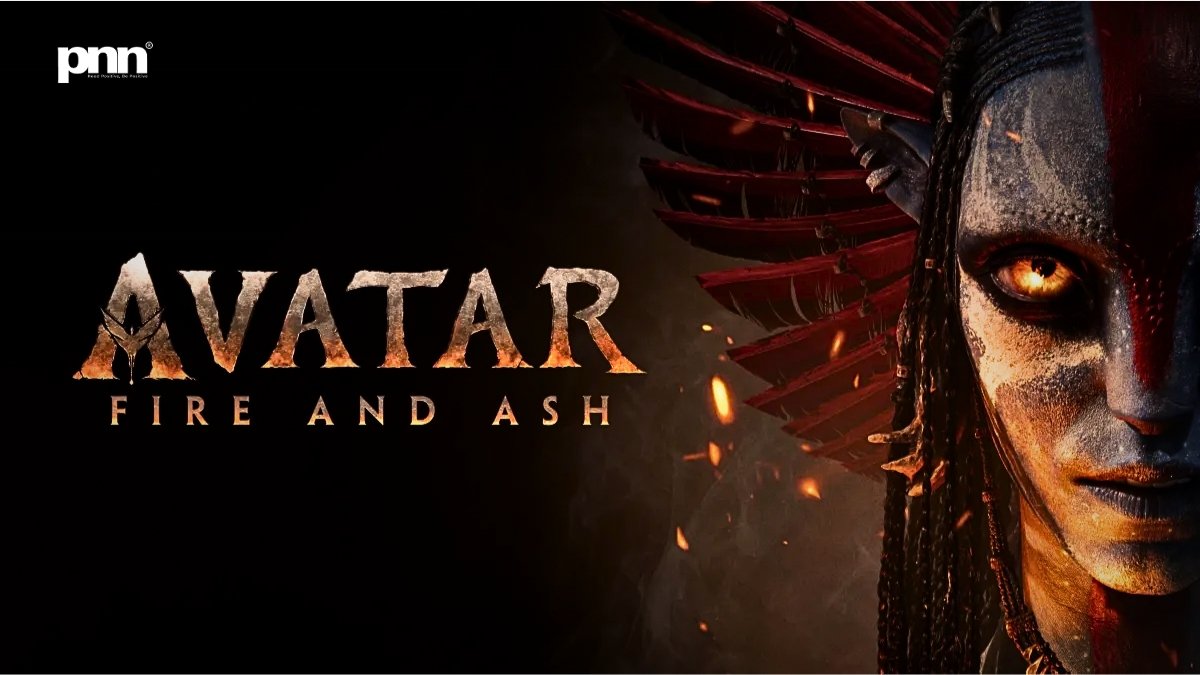
Mumbai (Maharashtra) [India], December 25: Some films arrive like cultural events. Others arrive like reminders. Avatar: Fire And Ash is both. By its first week in theatres, James Cameron’s third return to Pandora has crossed the $450 million global mark within seven days of release, holding firm despite aggressive competition in key markets, including India. That number alone would be a victory lap for most franchises. For Avatar, it’s merely… expected.
And therein lies the paradox.
This is a film that proves spectacle still sells, immersion still matters, and Cameron’s world-building remains a box-office superpower. Yet it also exposes a quiet truth the industry doesn’t say out loud: cultural dominance and commercial dominance are no longer the same thing.
The Avatar franchise was never built on quotable dialogue or meme culture. It was engineered as cinema architecture — designed to be experienced, not endlessly discussed. Fire And Ash continues that philosophy, expanding Pandora beyond oceans and forests into scorched biomes, volcanic clans, and morally ambiguous Na’vi factions whose idea of survival doesn’t involve harmony posters or eco-spiritual sermons.
This time, the story pivots toward conflict from within. The so-called “Ash People” introduce a more militant, survivalist ideology, challenging the franchise’s long-standing belief that nature, left alone, will always choose peace. It’s a darker turn, thematically and visually, and perhaps the most politically charged Avatar chapter so far — even if it still wraps its messages in phosphorescent foliage.
The Box Office Reality Check (Numbers Don’t Lie, They Just Judge Quietly)
By Day 6 and Day 7, Fire And Ash had accumulated approximately $450–470 million worldwide, with North America contributing a solid but not explosive share, and international markets — especially Asia and Europe — carrying the heavier load. India, in particular, has shown resilience in collections despite strong domestic releases pulling attention away.
The film’s reported production budget sits north of $250 million, excluding global marketing spends that likely push total investment beyond $350 million. This means profitability is inevitable — just not immediate. Cameron’s films have historically relied on long theatrical legs rather than opening-week fireworks, and Fire And Ash appears to be following that exact blueprint.
The takeaway? This is not a film chasing urgency. It’s built for endurance.

Why It’s Winning (Even When It’s Not “Winning Big”)
There’s no denying the positives.
-
Premium Formats Are Doing Heavy Lifting
IMAX, 3D, and large-format screenings account for a disproportionate share of revenue. Pandora still looks best when it’s towering over you, not compressed into a phone screen. Audiences are paying extra — and that matters in an era of shrinking attention spans. -
Global Appeal Remains Unmatched
Unlike dialogue-driven franchises, Avatar translates seamlessly across languages. Its visual storytelling allows it to perform consistently in markets where Hollywood films usually struggle. -
Brand Trust Is Still Intact
Viewers may not be evangelical about Avatar, but they trust it. They believe they’ll get cinematic value for money — and that’s a rare commodity now.
In short, Fire And Ash is doing what Avatar films always do: outlasting noise rather than competing with it.

Where The Heat Softens (And Yes, There Are Cracks)
For all its technical brilliance, the film hasn’t ignited the cultural frenzy Cameron once commanded.
-
Conversation Is Muted
Social chatter exists, but it’s not obsessive. There are fewer viral moments, fewer debates, fewer lines that escape the theatre into everyday language. -
Narrative Familiarity Is Creeping In
Despite new tribes and moral dilemmas, the structural beats feel… known. Human exploitation. Na’vi resistance. Spiritual reckoning. Repeat, with better CGI. -
Competition Is No Longer Intimidated
Regional films, especially in India, have proven they can coexist — and sometimes outperform — Hollywood tentpoles in their own territories. Avatar is no longer an automatic monopoly.
This doesn’t make Fire And Ash a failure. It makes it mortal.
The Cameron Effect: Still Real, Just Quieter
James Cameron doesn’t chase trends. He ignores them until they bend around him. That stubbornness is both his strength and his risk. Fire And Ash feels deliberately insulated from algorithm-friendly storytelling. There are no wink-at-the-camera jokes, no franchise fatigue humor, no desperate attempts to court Gen Z irony.
Instead, Cameron doubles down on earnestness — a word modern cinema often treats like a liability.
And yet, audiences keep showing up.
Because in a fragmented entertainment ecosystem, sincerity can still feel premium.

A Franchise At A Crossroads, Not A Cliff
The bigger question isn’t whether Avatar: Fire And Ash will make money. It will. Comfortably.
The question is whether Avatar remains the future — or has become a beautifully rendered constant in a rapidly shifting landscape.
This chapter feels less like a revolution and more like a consolidation. A reminder that cinema can still be grand, immersive, and unapologetically theatrical — even if it no longer dominates cultural oxygen the way it once did.
Perhaps that’s not a flaw. Perhaps that’s maturity.
Pros And Cons, Without The Sugarcoat
Pros
-
Stunning visual evolution of Pandora
-
Strong global box office resilience
-
Premium format dominance
-
Clear thematic ambition
Cons
-
Reduced pop-culture footprint
-
Familiar narrative rhythms
-
Less urgency compared to earlier chapters
-
Competition no longer feels intimidated
Final Thought
Avatar: Fire And Ash doesn’t roar. It burns steadily.
It proves that James Cameron still understands scale better than almost anyone alive — but it also quietly admits that dominance today looks different than it did a decade ago. Pandora is still profitable. Still immersive. Still visually unmatched.
It’s just no longer alone at the top.
And maybe that’s not the end of the fire — just a sign that the ashes are settling into something more permanent.