






















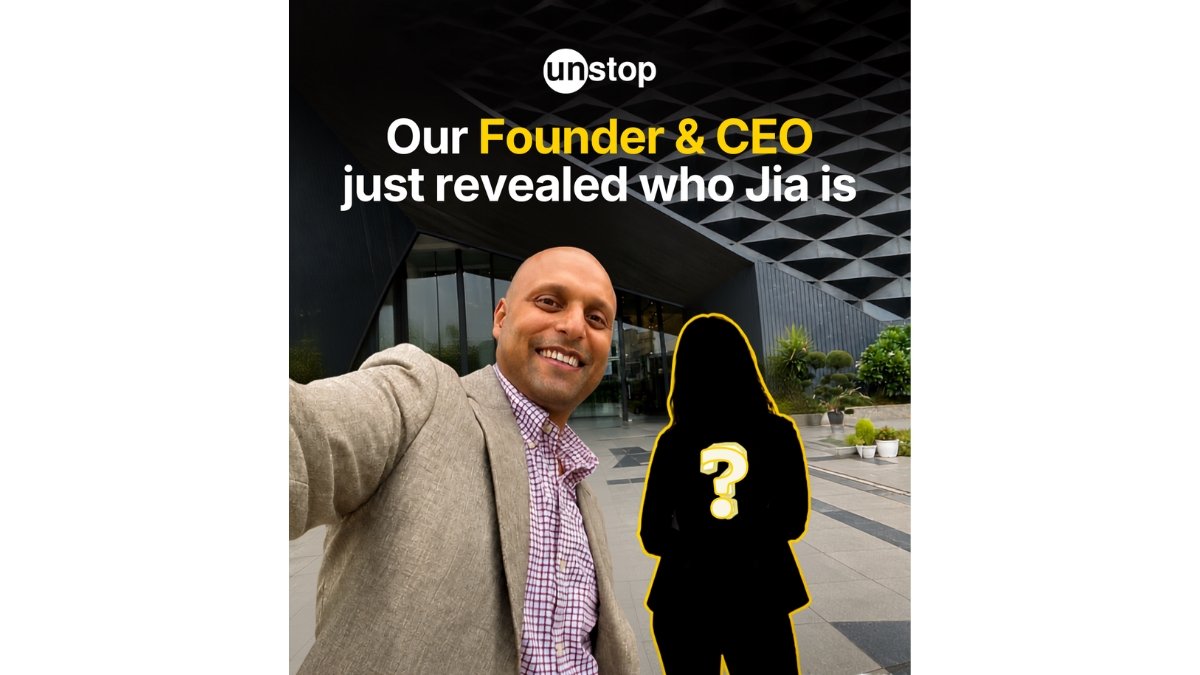
New Delhi [India], September 4: For most companies, the standard response to online criticism follows a predictable script: acknowledge briefly, apologise generically, and quietly retreat. Ankit Aggarwal, Founder and CEO of Unstop, chose a different path and in doing so, offered a rare, instructive example of how founders can convert public criticism into brand credibility.
The subject of the criticism was, on the surface, minor: a notification persona. Unstop, India’s largest early-talent engagement and hiring platform with over 30 million student users across 20,000-plus colleges, sends career-related alerts, internships, competitions, scholarships, job openings under a recurring sender identity the platform calls “Jia.” Over time, Jia’s persistence became a running joke among students, who took to social media to poke fun at the sheer volume of reminders landing in their inboxes.
It is the kind of criticism most companies would either ignore or address with a scripted, HR-approved statement. Aggarwal did neither. In a recent LinkedIn post, he engaged with the memes directly, admitting he had seen and laughed at several of them. Then he made his case for why the persistence was intentional. Jia, he argued, functions less like a marketing notification and more like the people in a person’s life who nag out of care rather than obligation: a mother insisting on an early wake-up call, a parent quietly leaving a plate of fruit nearby during a busy day. The reminder might be unwelcome in the moment, he wrote, but its value tends to surface only in hindsight when an opportunity has already been missed.
The reframing was deliberate, and it worked. Rather than dismissing the criticism or suppressing it, Aggarwal used it as the entry point for a broader point about the platform’s purpose: that persistence, in the specific context of career opportunities, is a feature worth defending rather than a flaw worth apologising for.
Why the Response Resonated
What distinguishes this moment from a routine social media post is the response it generated. Commenters credited Aggarwal with rare “brand empathy,” noting that most companies faced with similar mockery would either ignore it or respond defensively. Others said the explanation changed their perception of the feature entirely one user remarked that Jia had “earned more respect” once the reasoning behind the persistence was made clear.
That shift in sentiment is the real story. Aggarwal did not attempt to end the joke or ask users to stop making it. He let the memes stand, added context, and trusted his audience to reassess on their own terms. It is a subtler and, arguably, more effective form of reputation management than the standard playbook of quiet edits and formal statements because it treats the audience’s criticism as valid feedback rather than a threat to be neutralised.
Why This Matters for Unstop
For Unstop, the Jia episode is more than a social media moment. It reflects how a platform serving millions of students and early professionals can build a recognisable communication identity without becoming overly corporate or distant. By acknowledging the memes rather than suppressing them, Ankit Aggarwal showed that community feedback can be engaged with openly while still explaining the reasoning behind a brand decision. The larger lesson is that trust does not always come from avoiding criticism. Sometimes, it comes from showing audiences that their reactions have been heard, understood, and taken seriously, even when the company chooses to stand by the original intent.
A Broader Lesson for Founders
The episode arrives at a moment when brands across categories are increasingly quick to pull campaigns or scrub content at the first sign of public pushback, often after significant investment in the very material being withdrawn. Aggarwal’s approach suggests an alternative: that criticism, engaged honestly and without defensiveness, can be redirected into a demonstration of a company’s values rather than treated purely as reputational risk.
This is not a universal prescription; not every criticism warrants a defence, and knowing the difference is its own discipline. But the underlying principle is transferable: understanding the “why” behind a decision, and being willing to articulate it publicly and without apology, tends to build more durable trust than either silence or capitulation.
For Aggarwal, the path to founding Unstop began with his stint at Sapient, followed by an MBA from IMT Ghaziabad. He then went on to work with Deloitte and Teach For India before eventually building Unstop. The moment fits a broader pattern of leadership grounded in direct engagement rather than corporate distance. In an environment where founders are increasingly expected to be the public face of their companies’ decisions, his handling of the Jia backlash offers a case study worth studying not for the meme itself, but for what it reveals about the difference between managing a narrative and simply reacting to one.
If you object to the content of this press release, please notify us at pr.error.rectification@gmail.com. We will respond and rectify the situation within 24 hours.