

























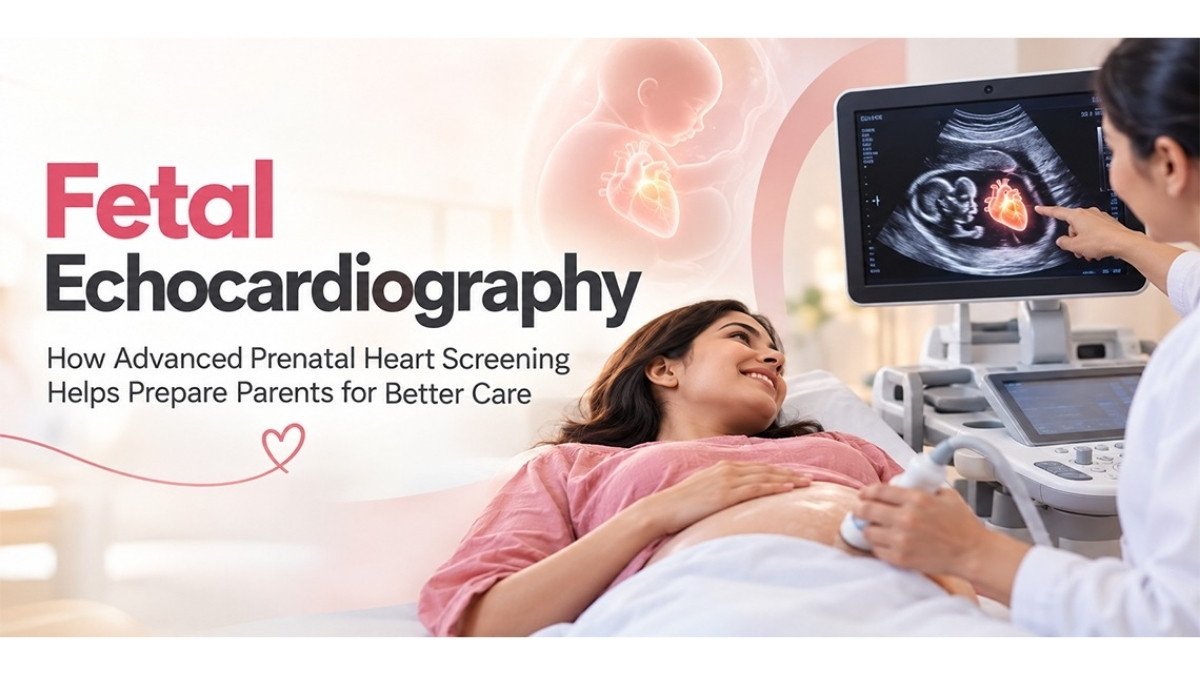
Dr. Manvinder Singh Sachdev emphasizes the significance of specific fetal cardiac examination that can assist in the early diagnosis of congenital heart disorders prior to birth.
New Delhi [India], October 10: The development of a child’s heart occurs extremely early in pregnancy. Therefore, the evaluation of the cardiac wellbeing of the unborn child becomes one of the key aspects of prenatal care. While antenatal ultrasound can determine many structural abnormalities of the baby, there are cases where additional diagnosis of the heart development of the baby is needed. Fetal echocardiography is a special kind of ultrasound examination of the child’s heart, and once there are any abnormalities in the heart of the baby, there is enough time to prepare for the treatment after birth.
As Dr. Manvinder Singh Sachdev, Senior consultant pediatric cardiology expert from Apollo Hospital, Gurgaon, and NanheDil, The Child Heart Centre, stresses, the role of fetal echocardiography cannot be limited only by the diagnosis of potential disease.
“Parents get a chance to understand the diagnosis and prepare themselves for whatever they would require once the child is born. It also provides enough time to prepare for the future needs of the child, especially if the child requires some specialised care in neonatology or cardiology immediately after birth. This is not meant to scare parents but to inform them about all aspects of the disease,” says Dr. Manvinder Singh Sachdev.
Fetal Echocardiography Explanation
Fetal echocardiography is a specific type of ultrasound test that gives a comprehensive evaluation of the heart of your fetus while it is still in the uterus. This allows a pediatric cardiologist or other relevant specialist to visualise heart chambers, valves, major arteries, blood flow and rhythm.
The test can be usually conducted during the second trimester of the pregnancy, which means that it would usually be conducted around 18 to 22 weeks of the pregnancy but the exact time depends on the reasons for conducting the test and clinical situation. In some cases, the test may be conducted earlier and then followed by another detailed examination in the proper gestation period.
Unlike imaging tests using radiation, fetal echocardiography uses ultrasound waves and it is a non-invasive test.
Who Needs to Get a Fetal Echocardiogram?
It is not mandatory to get a fetal echocardiogram during all pregnancies. The procedure is indicated when there is some specific reason to perform a more detailed examination of the baby’s heart.
The test may be advised by the doctor if there is some indication regarding the heart of the baby in a routine ultrasound or when there are some specific risk factors in the pregnancy. Such risk factors may include a history of congenital heart disease in the family, specific maternal diseases, fetal arrhythmia, specific chromosomal anomalies, etc.
It is decided depending upon each case and the judgement of the treating physician.
What Can the Examination Reveal?
The term Congenital Heart Disease is used to describe a wide range of heart structural defects that are already in place when the baby is born. Certain congenital heart defects are possible to detect even during pregnancy using the special technology of fetal cardiac imaging.
The fetal echocardiography can give the information on the growth of the heart, heart structures, chamber connections to blood vessels, valve condition, blood circulation and heart rhythm. The diagnosis of certain defects before the birth allows doctors to prepare the family for what is coming and develop a strategy of management of the neonatal period.
But there are certain restrictions in the prenatal diagnosis of congenital heart defects by echocardiography. There are some defects which are impossible to diagnose in advance; certain defects may become more visible only later in the course of pregnancy or even after the birth of the child. The visualisation of the fetus heart also depends on certain factors.
Why Early Detection Can Make a Difference
The purpose of early detection is not only about the identification of the heart condition, but about preparation of the health-care team and family too.
For some types of heart diseases, a child will have to be evaluated by a specialist right after his birth or will require some treatment which will be conducted within the neonatal period or later during his childhood. The knowledge about the presence of heart disease in the unborn child will give an opportunity for a coordination of the treatment before childbirth.
Sometimes, this information will also help in choosing the right place for delivering the baby depending on the complexity of the case.
As Dr. Manvinder Singh Sachdev puts it, “Each fetal heart diagnosis is unique. There are some heart conditions that only need monitoring and follow-up, while other conditions may require planning for delivery and treatment after delivery.”
Helping Parents Prepare, Not Panic
In cases where there are indications of a heart problem in the fetus, such news might be distressing to expecting parents. Nonetheless, it should be remembered that an abnormal result from a screening test does not automatically indicate that the child has any heart problems at all.
Through a specialist assessment, there will be an opportunity to determine if what was detected is a variation of normal, an artifact of imaging or an actual heart problem. In cases where the latter has been established, there will be counselling provided for both the parents and the baby regarding the matter.
Such an approach becomes particularly useful especially when the baby is expected to need specialised care right away upon birth. Parents and the entire medical team will then go into the birthing period knowing what to do.
A Collaborative Approach to Fetal Cardiac Care
Assessment of the fetal heart is usually one aspect of a much broader multidisciplinary program, which involves collaboration between obstetricians, maternal fetal medicine physicians, pediatric cardiologists, neonatologists and, where necessary, pediatric cardiac surgeons and other specialties.
The information acquired by means of fetal echocardiography may be used in deliberations on the management of pregnancy, delivery and post-delivery care of the infant.
At NanheDil, The Child Heart Centre, there are specialised services for children’s cardiac care, including fetal echocardiography.
Looking Beyond Detection
Prenatal imaging technology has made it possible to know a lot about how the fetus’s heart develops while still inside the womb. The importance of this knowledge lies not just in whether there is a problem. It lies in providing an opportunity to have meaningful discussions, consultations and preparations.
According to Dr. Sachdev, it is crucial that one looks at fetal echocardiograms as being part of the continuum of care for the fetus and child’s heart.
“The earlier we understand the cardiac condition of a baby, the better we will prepare for what is coming. For the parents, it is important to get a diagnosis and know the plan of action to ease their concerns and ensure that the baby gets proper specialists’ attention.” Dr. Sachdev said.
About Dr. Manvinder Singh Sachdev
Dr. Manvinder Singh Sachdev is a Senior consultant pediatric cardiology Specialist who practices at the Apollo Hospital in Gurgaon, India and at NanheDil, The Child Heart Centre. Some of his main interests in the clinical field include Paediatric Cardiology and Fetal Cardiac Assessment, particularly the treatment and diagnosis of congenital and acquired heart diseases in children.
About NanheDil, The Child Heart Centre
NanheDil, The Child Heart Centre is a specialised Senior consultant pediatric cardiology centre that caters to the diagnosis and treatment of various heart diseases in children. The specialised services provided by NanheDil, The Child Heart Centre include specialised cardiology tests, fetal echocardiography, and pediatric cardiology care.
Media Contact
Dr. Manvinder Singh Sachdev
Address: NanheDil, Sector 15, Jharsa Road, Gurgaon, Apollo Hospital, Gurgaon
Mobile: +918800607343
e-mail: nanhedilgurgaon@gmail.com
Website: https://www.nanhedil.com/
If you object to the content of this press release, please notify us at pr.error.rectification@gmail.com. We will respond and rectify the situation within 24 hours.