

























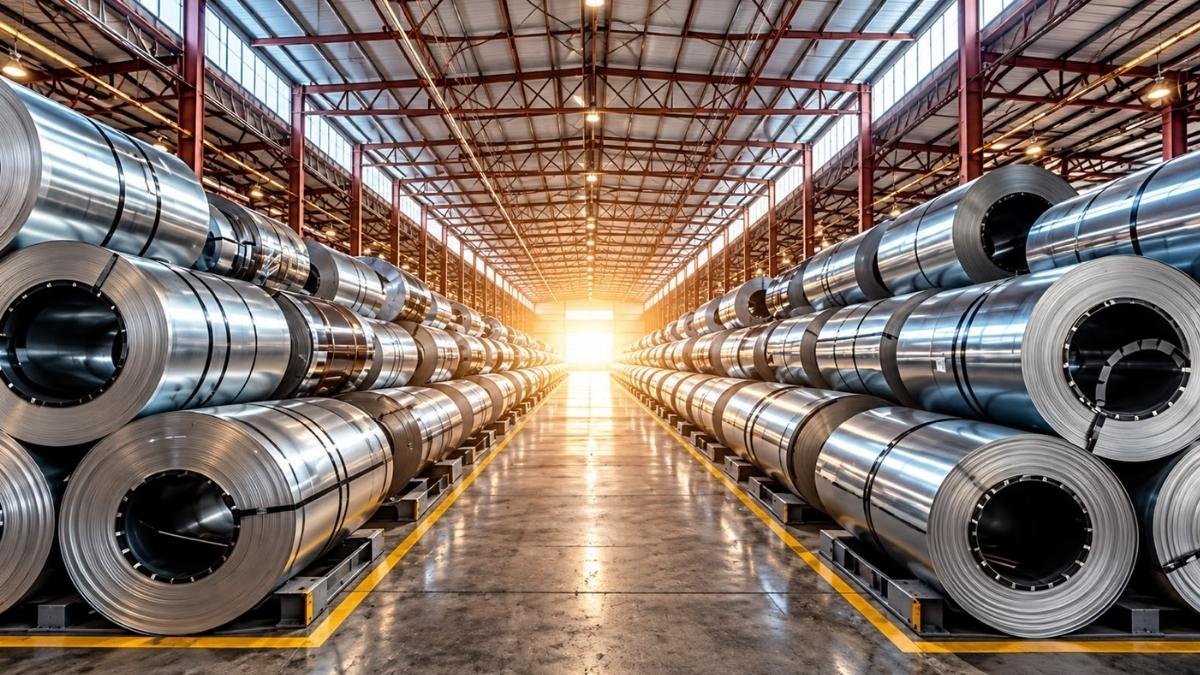
New Delhi [India], October 27: India is the world’s second-largest steel producer, with crude steel production reaching approximately 168.4 million tonnes in FY2025–26. The World Steel Association has highlighted India’s growing global significance in steel, noting that the country’s production is almost double that of the United States, reinforcing India’s position as the fastest-growing major steel market. India’s expanding steel industry underscores its strategic role in global manufacturing and infrastructure development. With investments continuing across the sector, capacity, production volumes and utilisation naturally remain important management measures. However, Goldratt Bharat believes that another question needs greater attention alongside these: how efficiently does installed capacity ultimately translate into sales, throughput and cash?
For an industry accustomed to measuring performance in tonnes, this represents an important shift in perspective. A plant may produce more steel and report higher utilisation without achieving a corresponding improvement in the cash score of the overall business. Money could be stuck in raw material or work-in-progress inventories, finished goods may wait for dispatches, or customers may delay payments beyond the overdue date. In each of these situations, the production process has done its job, but the translation from tonnes to cash has not been achieved!
When Higher Utilisation Does Not Mean Higher Throughput
Capacity utilisation remains an important operating measure, and the argument is not that steel companies should stop pursuing efficiency. The issue arises when every machine, process and department is expected to maximise its own utilisation regardless of what the rest of the system can deliver as a whole. Steelmaking involves a connected sequence of operations, and at any given point, one part of that sequence will determine how much the entire system can deliver. Improving utilization in areas that already have sufficient capacity will result in better departmental numbers without increasing overall throughput.
Consider a situation in which finishing operations is currently limiting output. If a rolling mill continues producing at maximum capacity, the additional material cannot move through the finishing line at the same rate. Work-in-progress begins accumulating between the two stages, lead times increase, and more working capital becomes tied up without generating additional sales. Theory of Constraints (TOC) therefore distinguishes between improving the constraint and improving a resource that already has spare capacity. The management question changes from whether every resource is fully occupied to whether the organisation is getting the maximum possible output from the factor currently restricting its performance.
The Constraint May Not Be Inside the Plant
For a steel company, that limiting factor does not necessarily have to be a furnace, rolling mill or finishing line. There may be sufficient finished material available, but dispatch could be unable to move it quickly enough because of logistics i.e. vehicle availability, loading infrastructure, documentation, railway movement or customer unloading capacity. In another situation, customers may be willing to accept material but further shipments cannot be released because credit limits have been exhausted. What initially appears to be a logistics or production problem can therefore turn out to be a collections or working-capital issue.
This is why Goldratt Bharat advocates examining the system from the customer end and working backwards. Management can first establish whether available material is being sold, dispatched, invoiced and converted into collections at the required pace. If this part of the chain is functioning effectively, attention can move upstream towards finishing, rolling, raw-material availability and other stages until the actual limiting factor becomes visible. Importantly, the exercise cannot be performed once and forgotten. Once one restriction is elevated, another part of the organisation becomes the new constraint, requiring management attention to shift accordingly.
Goldratt Bharat’s work with Jindal Steel provides an example of how changing management focus can affect financial outcomes. Jindal Steel reduced working capital by approximately 56%, releasing around ₹3,600 crore in two years through the application of TOC. The transformation occurred during a particularly challenging period for the steel sector following coal block cancellations and an industry downturn, making the improvement in liquidity especially significant.
Jindal Steel Chairman Naveen Jindal described how the organisation began paying greater attention to its cash score and cash velocity rather than looking only at measures such as price, profit or tonnes produced. He also highlighted reductions in raw-material and finished-goods inventory, which helped lower working-capital requirements. The lesson is not that production became less important. Rather, production was connected more directly with the organisation’s ability to generate cash. The objective was to get more from existing resources while ensuring that additional output moved through the complete cycle instead of getting stuck somewhere along the way.
Measuring the Journey From Material to Money
Tonnes produced show how much the manufacturing system has created, while tonnes sold and money collected indicate how much has successfully reached customers. Management must also understand how quickly the money invested in producing those tonnes returns to the organisation. Looking at these measures together can expose situations where apparent operational efficiency is actually increasing inventory, extending lead times or putting additional pressure on working capital.
The question becomes even more relevant as India prepares for substantial steel capacity additions. The Ministry of Steel has reiterated ambitions to reach 300 million tonnes of capacity by 2030 and 400 million tonnes by 2035. New capacity will undoubtedly be required as domestic demand and India’s industrial base expand, but companies can first determine whether physical capacity is genuinely restricting their growth. If the real limitation lies in dispatch, product availability, customer demand, receivables or another part of the value chain, adding equipment could increase investment without proportionately increasing sales.
From Plant Efficiency to Business Productivity
The shift from capacity utilisation to cash generation therefore does not require manufacturers to choose between operational efficiency and financial performance. It requires them to connect the two. A resource that constrains the entire system should be utilised extremely well because every hour lost at that point can reduce the output of the whole organisation. Resources with sufficient spare capacity, however, should operate according to what the system needs rather than producing solely to maintain an attractive utilisation percentage.
As Indian steel moves towards its next phase of expansion, this distinction could become increasingly important. The sector will continue to invest in new plants, technology, automation and capacity, but the return on those investments will ultimately depend on how effectively material moves from production through dispatch and into customer sales and collections. For management teams, the opportunity is to look beyond how many tonnes an asset can produce and examine how efficiently the entire organisation converts its resources into money. Volumes will remain fundamental to steelmaking, but the journey from volumes to cash may increasingly determine how much value that capacity actually creates.
If you object to the content of this press release, please notify us at pr.error.rectification@gmail.com. We will respond and rectify the situation within 24 hours.