











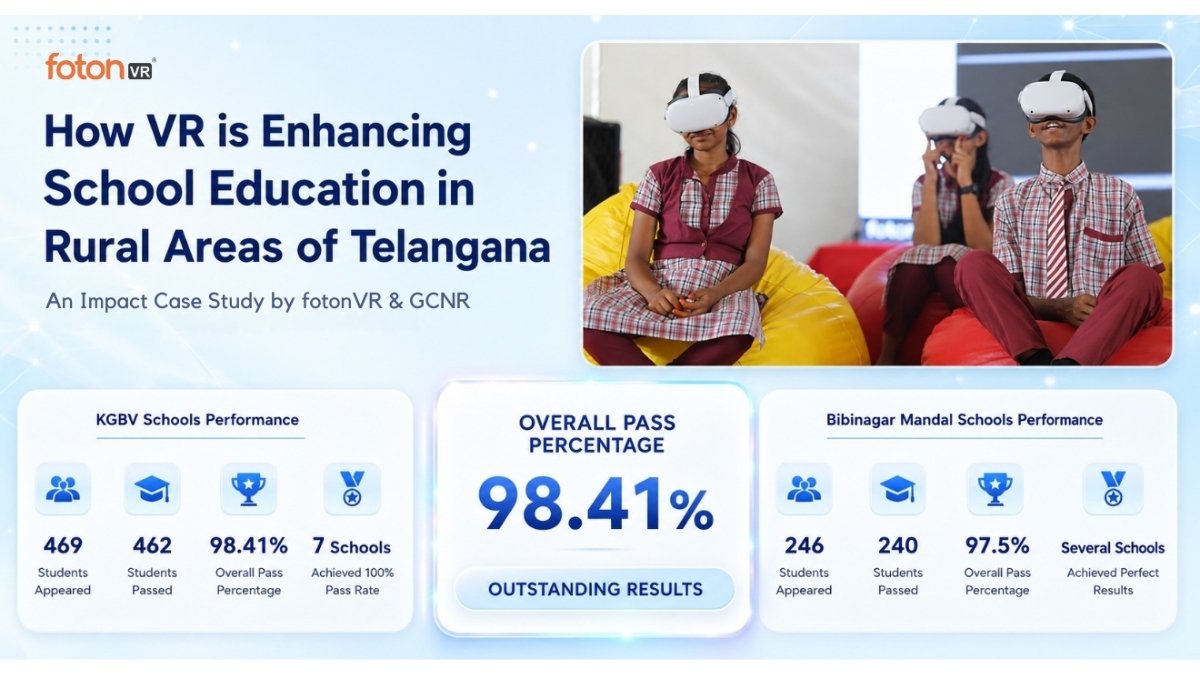
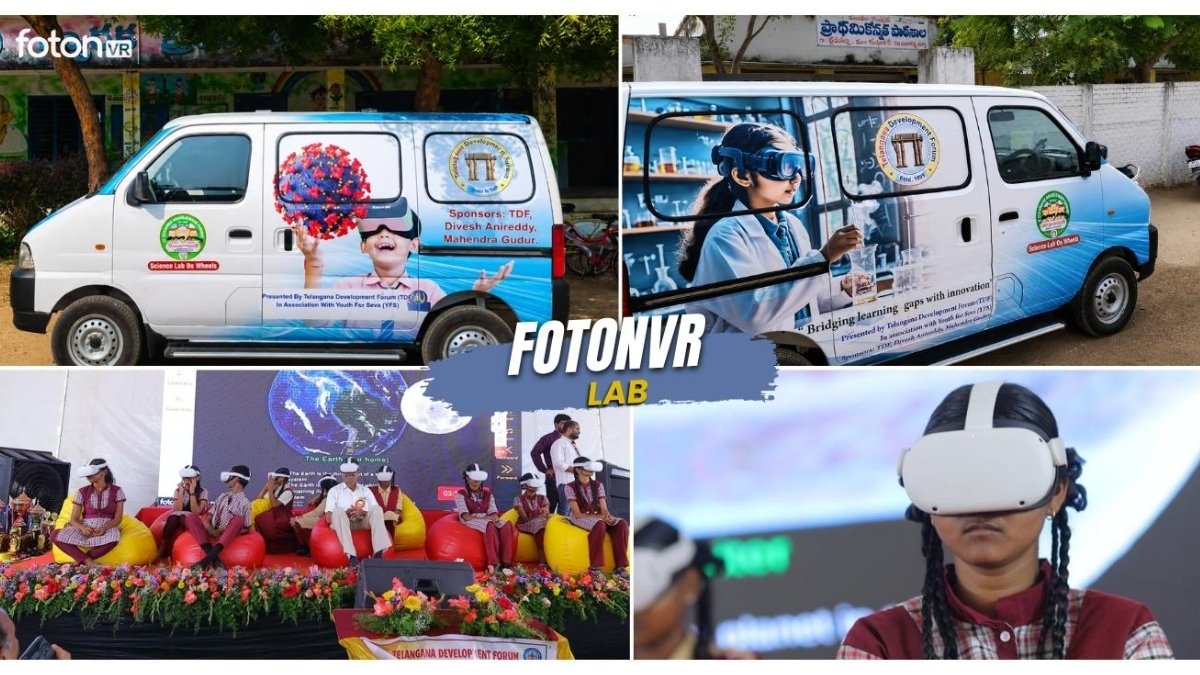
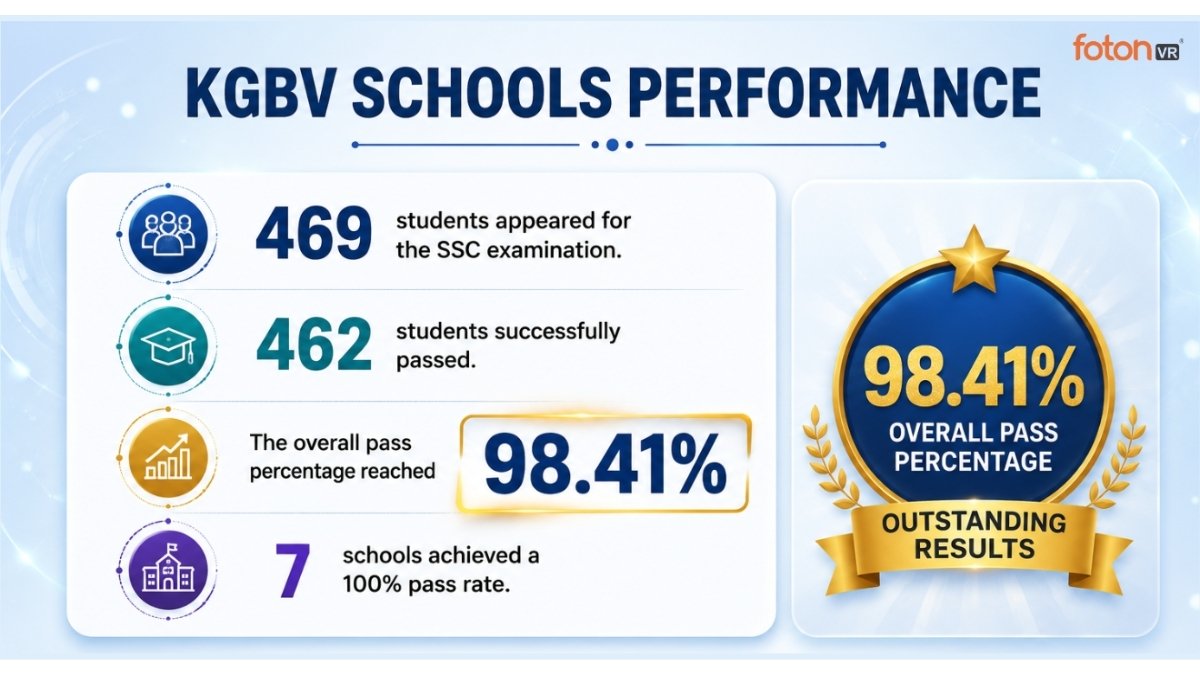
New Delhi [India], August 15: Seven schools with a perfect pass rate. A combined 98.41% success rate across nearly 500 SSC candidates. These aren’t the numbers typically associated with under-resourced rural classrooms, but they’re the results GCNR Educational Trust has recorded since introducing immersive fotonVR learning through its Science Lab on Wheels initiative, delivered in partnership with fotonVR.
A Gap Rural Classrooms Have Long Faced
Rural schools across India frequently operate without access to science labs, demonstration equipment, or interactive teaching tools. Subjects that depend on visualization, such as the human body, ecosystems, electricity, and the solar system, are often taught through textbook description alone, leaving a gap between what students read and what they actually understand.
GCNR Educational Trust is a non-profit organization focused on bridging the educational infrastructure gap in rural India through mobile learning solutions like the “Science Lab on Wheels.” Based in Telangana, India,
To support this vision, the Trust partnered with fotonVR, a curriculum-aligned XR-based learning platform that transforms textbook concepts into interactive 3D + 360° experiences, making complex subjects easier to understand.
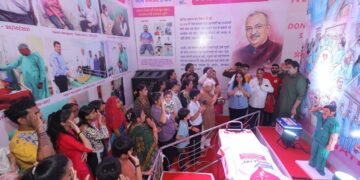
The trust set out to close that gap. Rather than waiting for infrastructure to catch up, the Trust brought the lab to the students: a mobile VR-based learning initiative that turns abstract chapters into 3D experiences students can explore directly.
What Changed Inside the Classroom after fotonVR’s Introduction
Teachers involved in the rollout noted a shift almost immediately. Lessons that once required repeated explanation became easier to grasp once students could see the concept in front of them. Attention spans lengthened, participation increased, and students began asking more questions rather than simply absorbing information passively.
That shift in engagement is well documented in education research. What’s harder to demonstrate is whether it translates into actual academic performance. In this case, the assessment data confirms that it did.
Measurable Learning Gains
| Metric | Result |
| Schools with gains above 30% | Several participating schools |
| Highest-performing school gains | 40%+ improvement |
| Strongest individual cases | Learning gains exceeding 100% vs. baseline |
Comparing baseline and endline assessments across participating schools, GCNR recorded consistent academic improvement across the board, not isolated to a single school or subject.
SSC Results at a Glance
| School Group | Students Appeared | Students Passed | Pass Percentage | Perfect Scorers |
| KGBV Schools | 469 | 462 | 98.41% | 7 schools at 100% |
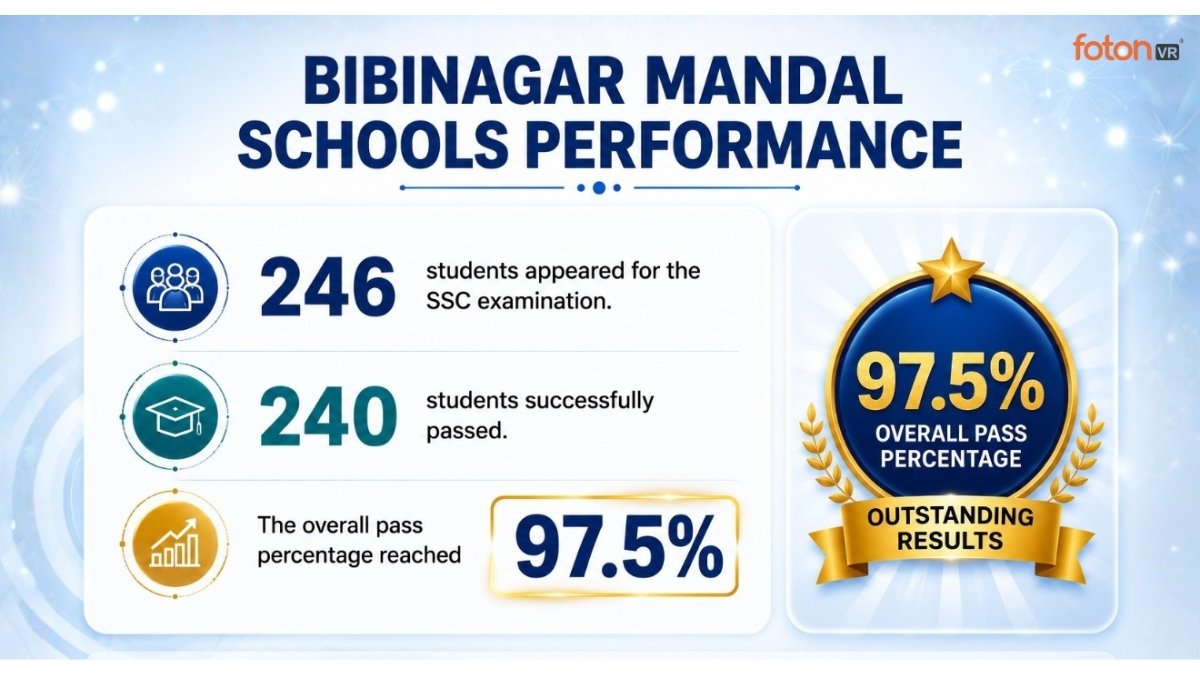
| Bibinagar Mandal | 246 | 240 | 97.5% | Several schools near-perfect |
Why This Matters Beyond the Numbers
The significance of these results isn’t just the scores themselves, it’s where they were achieved. Students in underserved, rural communities are rarely given access to the same educational technology available in urban private schools. GCNR’s initiative shows that when that access gap is closed, even briefly and through a mobile program, students perform at a level that rivals, and in these cases exceeds, far better-resourced institutions.
That’s a strong signal for how immersive learning tools might be deployed more broadly: not as a novelty for well-funded schools, but as an equalizer for schools that need it most.
Looking Ahead
GCNR Educational Trust’s partnership with fotonVR offers a working model for how technology, deployed with clear educational intent, can move the needle on outcomes that matter most to students, parents, and administrators alike: whether a child passes their exams and genuinely understands what they were taught.
As more education trusts and school networks look for scalable ways to improve rural learning outcomes, the Science Lab on Wheels program stands as a data-backed example of what’s possible. Read in Depth: How VR is Enhancing School Education in Rural Areas of Telangana.
If you object to the content of this press release, please notify us at pr.error.rectification@gmail.com. We will respond and rectify the situation within 24 hours.