

























Integrated mixed-use campuses attract tech talent by combining work, housing, amenities, flexibility, wellbeing, networking, & sustainable office environments
New Delhi [India], June 18: The way technology and IT companies lease office space is undergoing a quiet but significant transformation. Gone are the days when a sleek glass tower in a standalone business district was the gold standard. Today, forward-thinking companies from fast-scaling startups to established IT giants are seeking commercial space within integrated, mixed-use developments. The reason is simple: the best talent demands more than a desk.
The Shift in Corporate Leasing Priorities
Ask any HR head at a mid-sized tech firm about their biggest retention challenge, and workspace experience will almost always come up. The post-pandemic workforce has recalibrated expectations. Employees want proximity to green spaces, dining, recreation, and even housing all within or near their workplace.
This has made campus-integrated office spaces the most competitive real estate category across India’s growth cities. Whether evaluating commercial property, the demand pattern is consistent: companies want to operate inside a live-work-play ecosystem rather than an isolated business park.
Why IT Companies Are Rethinking Location Strategy
When office spaces for lease sit within a development that also offers residences, parks, retail, and cultural venues, the commute effectively collapses. People walk to work, step out for a proper lunch, take an evening run through a landscaped corridor, and attend community events without ever leaving the precinct.
For tech companies, this is not a lifestyle indulgence. It is a recruitment and retention strategy. Employees working within mixed-use developments consistently report higher job satisfaction and longer tenure metrics that directly impact a company’s bottom line.
Flexibility Is the New Lease Clause
The second major force reshaping corporate leasing is flexibility. Conventional long-term leases, fixed footprint, multi-year lock-ins no longer fit the operating model of most IT businesses. Scaling a product team, contracting after a restructure, or piloting a new city presence all require structures that move with the business.
The best new commercial projects in peer cities are now designed with this in mind offering varied floor plate sizes, co-working adjacencies, and modular expansion options so companies can grow within the same campus without the friction of relocating.
The Competitive Edge of the Live-Work-Play Campus
Mixed-use developments extend the office campus into every dimension of daily life. When employees can live in apartments or flats within the same precinct where they work, stress drops measurably. When cafes, gyms, art spaces, and event venues are steps away, the line between professional productivity and personal wellbeing blurs in the best possible way.
There is also a less obvious advantage: informal networking. Innovation thrives when professionals from different-lease companies share green corridors and common areas organically, rather than through engineered corporate events.
What Good Commercial Campuses Look Like
The strongest integrated campuses share a few principles: LEED-certified buildings, genuine green space, seamless internal connectivity, and a curated mix of tenants that builds community rather than congestion.
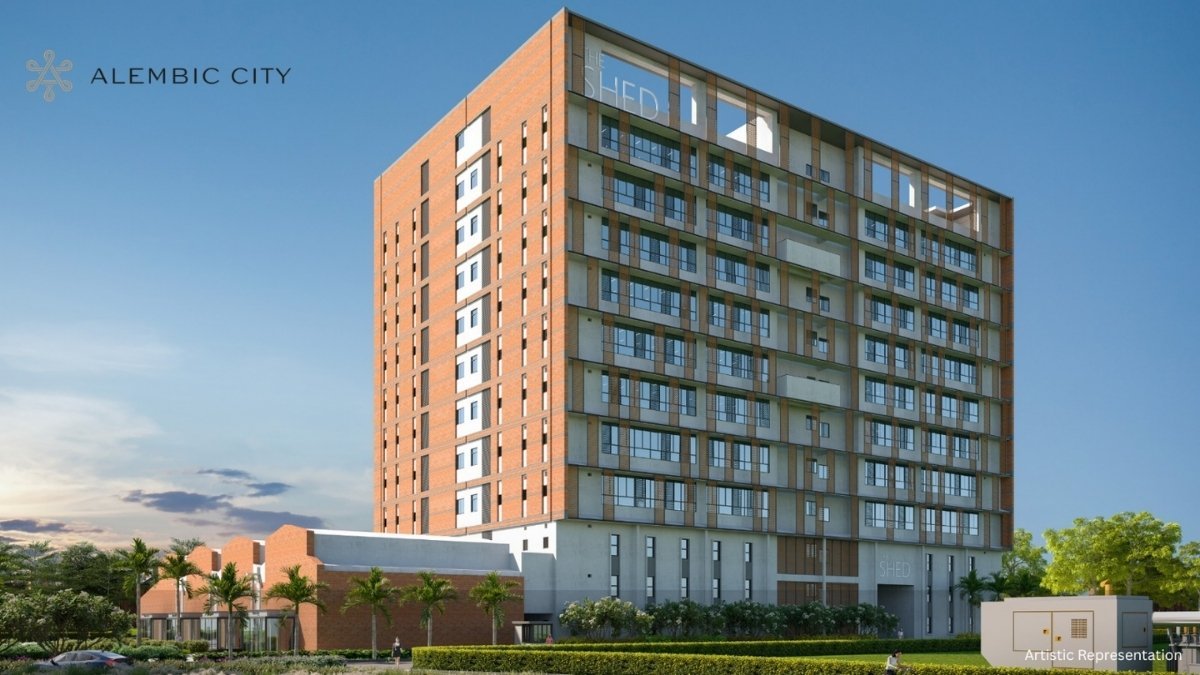
Alembic City in Vadodara reflects this model well. Its commercial district spans across distinctive buildings, each with real character. Ficus Court is designed around natural light and landscaped green spaces, creating an environment where productivity and wellbeing reinforce each other. The Shed, originally constructed in the mid-1920s as an Engineering Shed building, has been reimagined as a contemporary innovation hub, the kind of address that signals something meaningful to prospective hires. For companies exploring office space for lease in Vadodara, the campus offers a compelling alternative to conventional business parks.
As integrated developments raise the bar across Indian real estate, the corporate leasing decision is no longer purely about lease per sq. ft. It is about what the address offers the people who show up there every day.